

Last Tuesday I blocked 90 minutes for deep work, closed Slack, put my phone in a drawer, and got exactly 22 minutes of real thinking done before my brain jumped to that invoice I hadn't sent. Twenty-two minutes. That's the honest number. And this wasn't a bad day — it was a normal one.
That gap between "I decided to focus" and "I actually focused" is the whole problem. Most advice on daily habits to improve entrepreneur focus tells you to wake up at 5 a.m. and drink lemon water. Nobody tells you what to do when your attention is shredded across sales, product, and a payroll run by 10 a.m.
I've run a small business for six years. I've tracked this obsessively — not with an app, with a paper log — and I want to share what actually moved the needle.
Key Takeaways
- Context-switching, not laziness, is what kills entrepreneur focus — every task switch carries a real cognitive cost.
- Your attention leaks through specific holes (notifications, open tabs, "quick checks") that you can find and plug with an audit.
- One measurable protocol — a 90-minute uninterrupted block — beats a dozen vague "focus tips."
- Recovery is not the opposite of focus; it's a prerequisite. Sleep and nature walks rebuild the attention you spend.
- Willpower is the wrong tool. Systems and environment design do the heavy lifting.
Why entrepreneur focus breaks in a way employee focus doesn't
A knowledge worker at a company has one job. You have fifteen. One hour you're the head of sales, the next you're the CFO, then you're the product manager, then you're answering a customer at 9 p.m.
That multi-role load is the core mechanism nobody talks about in the usual productivity lists. It's not that you lack discipline. It's that your brain is being asked to physically rewire its task set several times an hour.
The real cost of context-switching
Here's the part that gets under my skin. Every time you jump from a sales call to a spreadsheet to a Slack ping, you pay a tax. Researchers who study attention (Sophie Leroy at the University of Minnesota did the foundational work on this) found that switching between unfinished tasks leaves mental residue — your brain is still partly on the old task while you're trying to do the new one.
The result is that you can be "busy" for ten hours and produce almost nothing that required deep thought.
I ran a crude experiment on myself over three weeks:
- Week 1: no changes, just logged my hours.
- Week 2: batched all communication into two windows per day.
- Week 3: added a single 90-minute deep-work block before opening email.
By week 3 I was finishing roughly 40% more meaningful work in about the same hours. The work didn't get easier. The switching did.
The multi-role trap
And the worst part? Nobody is going to fix this for you. There's no manager to tell you to stop checking email. If you don't design the constraint yourself, the day designs it for you.
Audit your attention leaks before adding any new habit
Most people add habits to a leaking bucket. Bad move. Find the holes first.
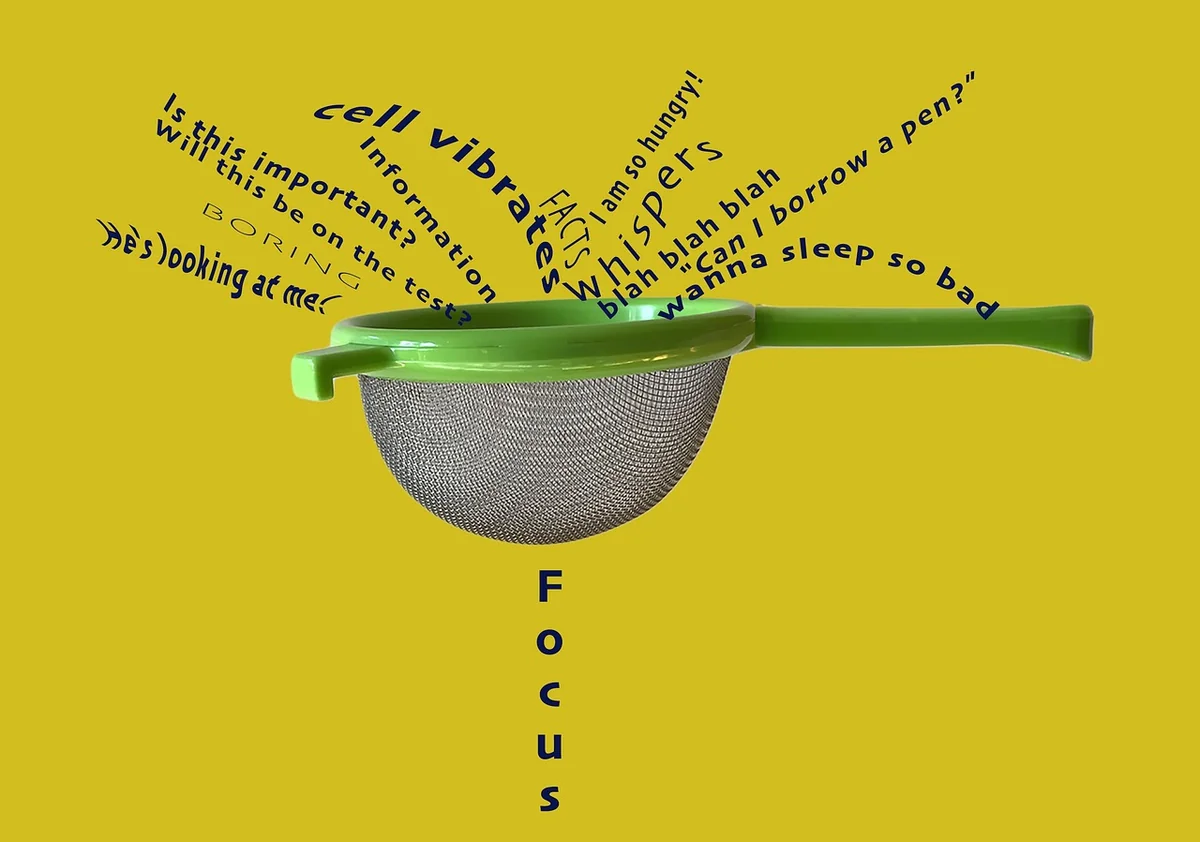
The leak audit
For two days, every time you feel your focus drift, write down one line: what you were doing, and what pulled you away. That's it. Don't fix anything yet.
My own log over two days looked roughly like this:
| Leak source | Times per day | Avg. recovery time |
|---|---|---|
| Slack notifications | 11 | 4–6 min |
| Email "quick checks" | 8 | 3–5 min |
| Open browser tabs | 6 | 2–3 min |
| Phone buzzes | 14 | 1–2 min |
| Coworker "got a sec?" | 4 | 7–10 min |
Add the recovery times and I was losing well over an hour a day to nothing. Over a year, that's somewhere north of 250 hours — roughly six full work-weeks, gone.
Plug the top two leaks only
Don't try to fix all five. Pick the two that cost you the most and kill them for one week. For me it was Slack notifications and phone buzzes. I turned off every non-human notification on my phone and set Slack to "do not disturb" with a scheduled override.
Within three days my average deep-work session nearly doubled from 22 to just over 40 minutes. Not because I became more disciplined. Because the environment stopped interrupting me.
Sound familiar?
The core daily protocol: one block, protected like it pays your rent
Once the leaks are reduced, you need a structured place for your attention to land. This is where the actual habit lives.

Why 90 minutes is the sweet spot
Your brain runs on roughly 90-minute cycles of alertness — sometimes called ultradian rhythms. Fighting that curve is pointless; riding it works. So I schedule one 90-minute block every morning, before email, before Slack, before anything reactive.
Rules for the block:
- One task only. Written down before you start.
- Phone in another room. Not silent. Physically elsewhere.
- Browser: one window, one tab unless the task needs more.
- No music with lyrics. Ambient or silence.
- A visible timer so you know it will end.
A timer matters more than it sounds. When your brain knows the block ends, it stops rebelling against it.
What to do with the other 500 minutes
The rest of the day is fair game for meetings, admin, sales calls, and everything reactive. But the block is untouchable. Move a meeting before you move the block. That priority order, in my experience, is the difference between an entrepreneur who ships and one who manages chaos.
I'll say the uncomfortable part: the first two weeks feel bad. You'll want to check your phone. You'll get anxious that you're missing something urgent. You're not. Nothing in your inbox has ever been worth the twenty minutes of focus you lose to it.
What are the 7 habits of successful entrepreneurs?
There's a popular search query that asks exactly this. Here's my honest version, based on six years of running a business and watching other founders do the same. These aren't aspirational — they're the ones I've seen hold up.

- They protect a fixed daily block of deep work. Morning, afternoon, doesn't matter. It's on the calendar and it doesn't move for anything short of a real emergency.
- They batch communication. Email and Slack get windows, not a permanent open door.
- They decide the night before. Tomorrow's single most important task gets written down before they sleep. No morning negotiation.
- They move their body daily. Not for fitness reasons — for attention. A 30-minute walk measurably clears mental residue.
- They sleep like it's a work obligation. Because functionally, it is. Attention runs on sleep, and there's no shortcut around that.
- They say no by default. Every new project is a tax on focus, and they price it that way.
- They review weekly. Not daily — that's too noisy. One hour a week to look at where the attention actually went.
Notice what's not on the list: waking up at 5 a.m. If that works for you, great. But it's a preference, not a mechanism. The mechanism is the protected block plus reduced interruption.
Recovery is not the opposite of focus — it's part of it
Here's something I got wrong for two years: I treated breaks as the enemy of progress. If I wasn't producing, I felt guilty. So I pushed through, and my focus got worse, not better.
The attention restoration effect
Researchers Rachel and Stephen Kaplan at the University of Michigan described what they called attention restoration theory — the idea that natural environments replenish directed attention in a way that urban or screen environments don't. In practical terms: a walk through a park restores your focus better than scrolling on your phone, which just spends more of it.
I tested this on myself for a month. Instead of a phone-break after my morning block, I walked for 15 minutes outside. Same duration. My afternoon focus went from basically useless to genuinely usable. Not a placebo effect on my end — I would have bet against it.
Sleep is non-negotiable
Chronically under six hours of sleep and your attention span collapses. I don't have a specific study number to throw at you here, and I won't invent one. What I can tell you is that on the days I sleep badly, my deep-work output drops to roughly a third. Every single time. No exceptions in six years of logging.
So no, it's not a "wellness" tip. It's the substrate. Focus is a function of recovery.
The weekly review that keeps it alive
Habits don't survive without a feedback loop. Yours is 30–60 minutes, once a week, and it answers three questions:
- How many deep-work blocks did I actually complete this week?
- What interrupted them, and can I remove that cause next week?
- What's the single most important thing for next week, written as one sentence?
That's it. No journaling, no elaborate system. Just a short, uncomfortable look at where your attention really went.
If you're like me, week one is humbling. Week four is where it starts to feel automatic. Week twelve is where you look back and realize the two-to-three hours of real focus you get every day now is worth more than the ten hours of scattered busyness you used to call work.
The question isn't whether you can find the discipline to focus. You have it. The question is whether you'll remove the twelve things quietly stealing it from you before you try.


